Buran Ghati Pass Trek, Uttarakhand
4.5/5
- 7D / 6N
- Shimla to Barua
26 Kms
15,000ft
Mod. to Difficult
Expert Guide
Buran Ghati Pass Trek, Uttarakhand
4.5/5
- (1,232 Reviews)
- 7D / 6N
- Shimla to Barua
26 Kms
15,000ft
Moderate to Difficult
Expert Guide
Overview
Buran Ghati is one of India’s most beautiful Himalayan hikes. Because this walk covers every feature of a classic alpine scenery – woods, meadows, rivers, lakes, waterfalls, and communities – we can make this simple yet bold assertion. The excitement of a nighttime Pass crossing, snow rappelling, and snow slides is added to the mix! This shepherd’s path connects Shimla’s Pabbar valley with Kinnaur’s Baspa valley. The Guna Pass and Rupin Pass are two more routes in the same mountain range that link these two valleys. In reality, the Buran and Rupin valleys run parallel to one other. Only a single cliff range separates them. Summer or fall are the best times to go on the Buran Ghati trek in Himachal Pradesh’s magnificent Dhauladhar peaks. In the summer months of April-June, you may rappel down a vertical snow wall and slide in the snow. The ice has melted in the fall months of September and October, and the Pass is descended over a relatively difficult stone road. The sceneries are different yet equally stunning in both seasons. The weather is too harsh to travel in other months. We will organize transportation from Shimla to Janglik for you. Your hike begins with welcomes from Himachali mountain people in this village. Dayara, a wide meadow with galloping horses, is reached after passing through pine trees.
Trek Itinerary
Buran Ghati's base camp is Janglik, around 150 kilometres from Shimla. It's an ancient Himalayan community with a spotty Airtel connection. With its meandering lanes, wheat fields, and Himachali cottages, the journey from Shimla to Janglik is picturesque. At Rohru, the flowing Pabbar river joins you. The final location you'll find an ATM is in Rohru. You take a left turn just beyond Chirgaon to climb a dirt route. Tangnu and its pine trees are two hours away. The car will drop you off in Diude after passing via a police checkpoint and a damaged bridge. The distance between Diude and Janglik is short.
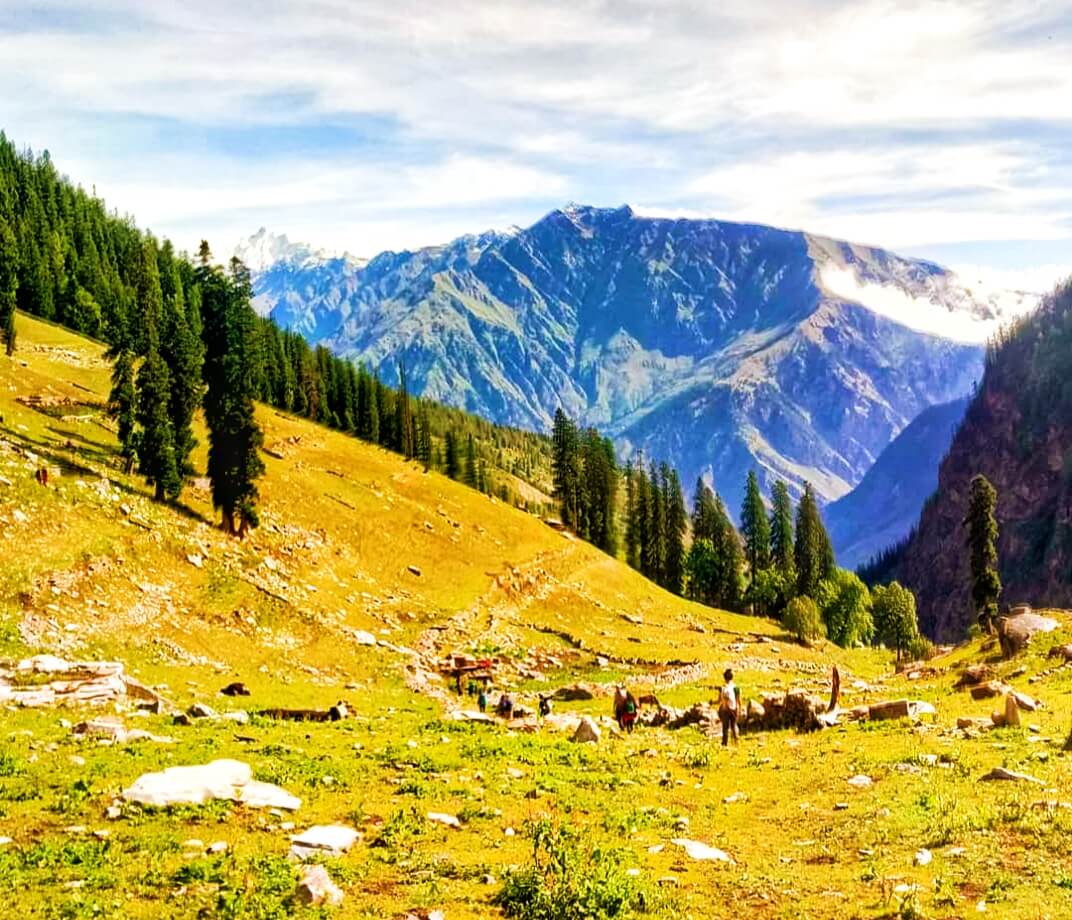
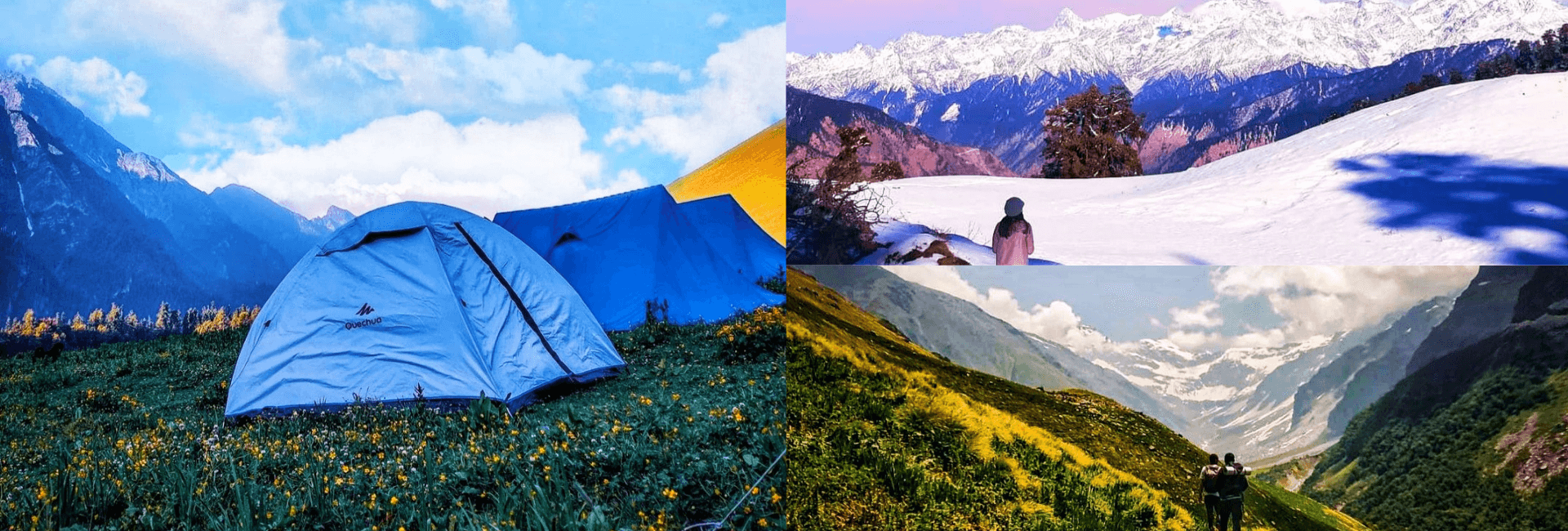
As you travel through the village, you will see Himachali wooden structures. Deodar-wood buildings have intricate carvings and beautiful roofs. You'll be out of the village in under 15 minutes. You'll come across a steep track that leads to an oak and pine woodland. As you progress farther into the woods, the route will become more gradual. The forests suddenly clear, revealing the vastness of Dayara. When you view a large, undulating green meadow with thousands of golden wildflowers, your heart will leap with joy. On one side of the meadow, there are little hills, while on the other, there is a gorge. Horses racing with enthusiasm among flocks of sheep may be seen in the middle. Spend the evening with Himalayan herders from the area. They'll tell you about their challenging but happy existence in the mountains in a lighthearted manner.
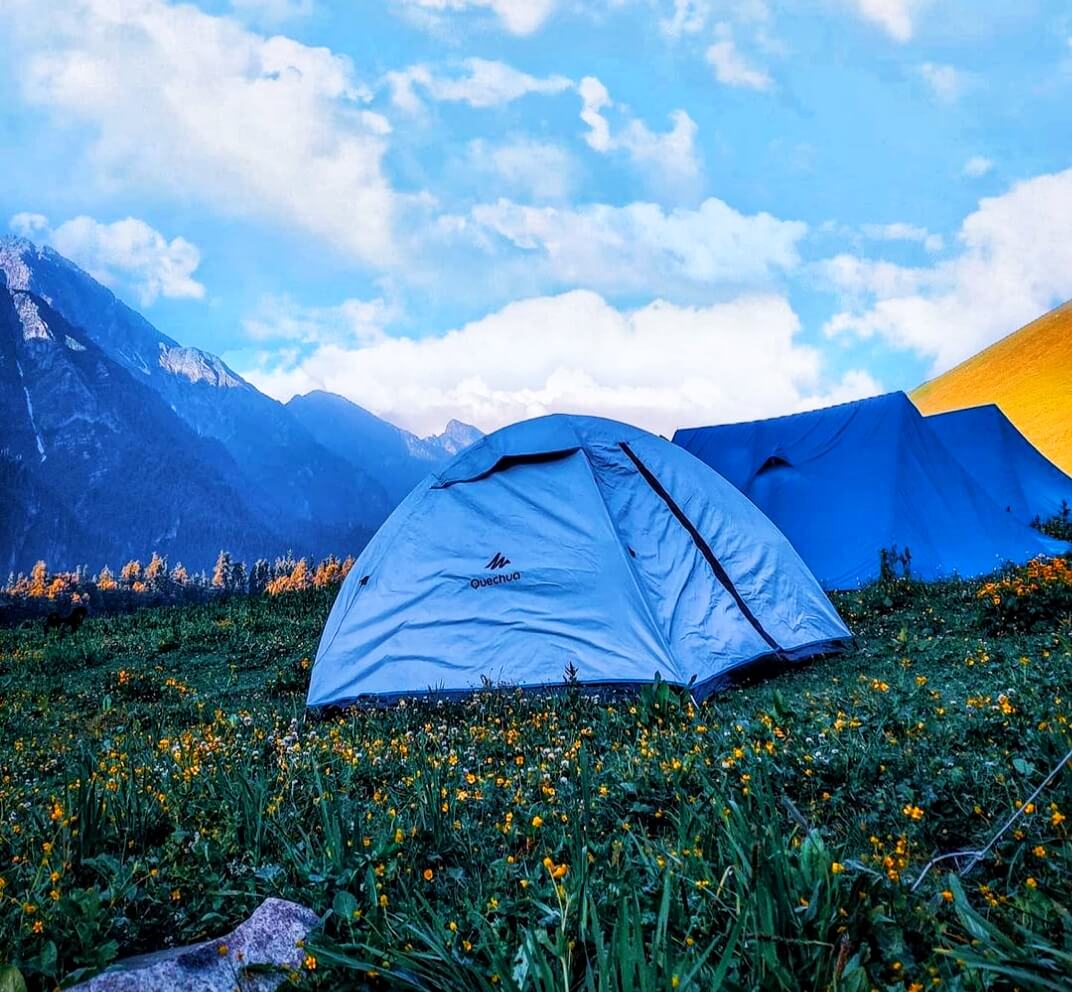
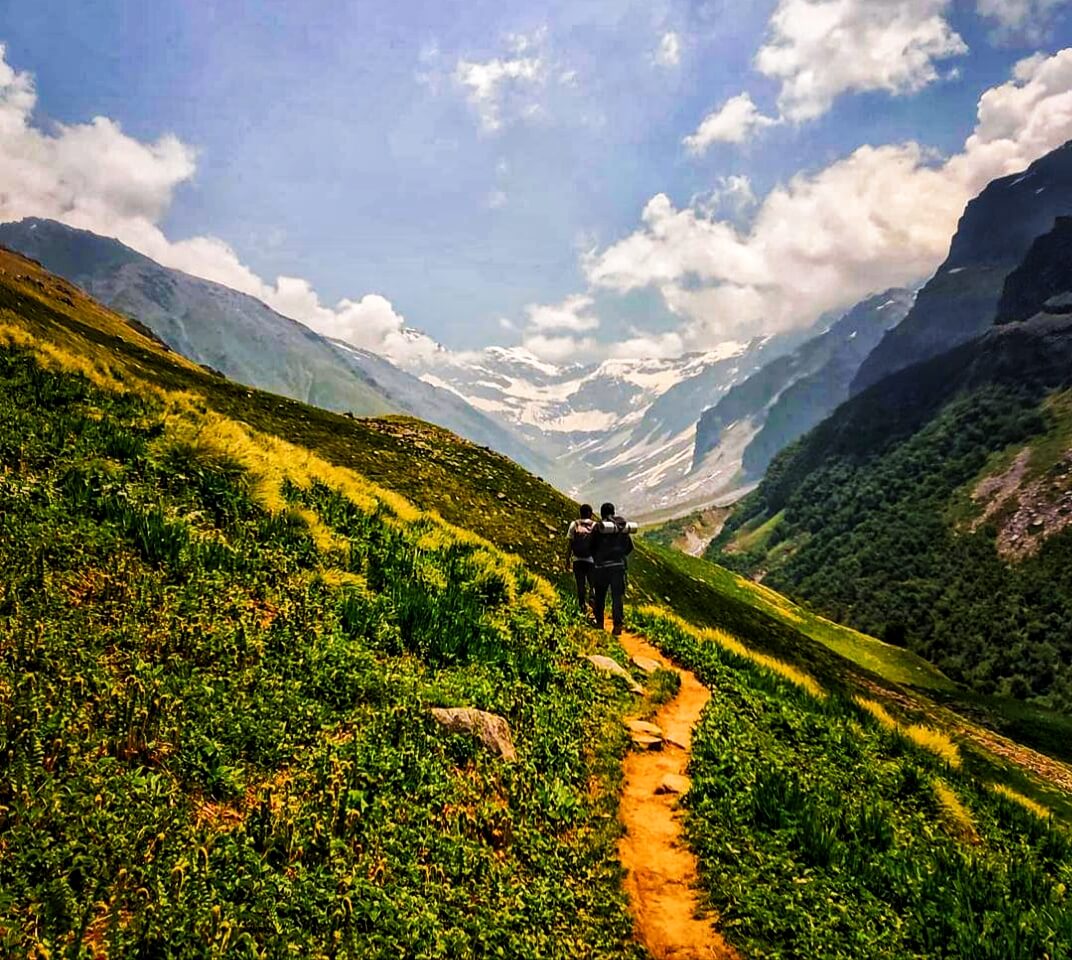
We also recommend getting up early to see the sunrise. You'll be intrigued by the interplay of golden rays and grey shadows across a wide carpet of grass. You are mistaken if you believe you have seen all there is to see of meadows. Today you will go across field after meadow, with woodlands strewn around. The first woodland you'll see is another pine forest, followed by silver birch, or bhoj. In ancient times, the bark of the bhoj tree was used to make paper. The path from Dayara to Litham is nearly all downhill, with many streams to cross. Guna Pass is visible among the now-snow-capped Dhauladhar range. The Litham campground is reached after crossing the Chandranahan creek. Litham, like Dayara, exudes a certain allure. The rocks that hide Buran Pass are just in front of you. The Chandranahan waterfall's mouth may be seen on your left. The Pabbar river is on your right, flowing sweetly before the mountain range that hides the Rupin valley. Because one day is spent on an excursion to Chandranahan Lake, you get to stay at this beautiful campground for two days.
On your route to Janglik, you stop at Chandranahan Lake, the source of the river where you are camped. The lake is revered because, according to legend, the moon atop Lord Shiva's head took a bath in it. As a result, the name. You get up early in order to return to Litham by lunchtime. Because of the high approach and descent, it will be a challenging day. However, the scenery you will see is well worth the effort. We'll cross the brook we jumped over on our way to Litham and head for the waterfall. The ridge top may be reached through a shepherd's track. The snout of the waterfall is highlighted with attractively placed stone cairns. From here, it's another hour's trek over snow patches to the lake. Chandrahan is a constantly snow-fed glacial lake. For the majority of the year, it is frozen. Despite its diminutive size, the lake's bowl-like position amid flanking mountains under a blue sky renders it inconsequential.
Litham is the trek's final meadow. You're now on your way to Dhunda, an alpine high-altitude camping. Grey boulders and ice spots will replace the green grass. The Dhauladhar range, as well as the Pabbar, continue to accompany you along a well-marked track. However, the river is now running considerably more quickly. You'll come to a U-shaped gorge-like valley if you stroll along the river's left side. Buran Ghati appears for the first time on your left at this point. Dhunda, at 13,300 feet, is situated against the Pass's foot. Unlike the earlier colourful campgrounds, this one is fully surrounded by snow in the summer. The height, as well as the prospect of traversing the Pass, will thrill you.
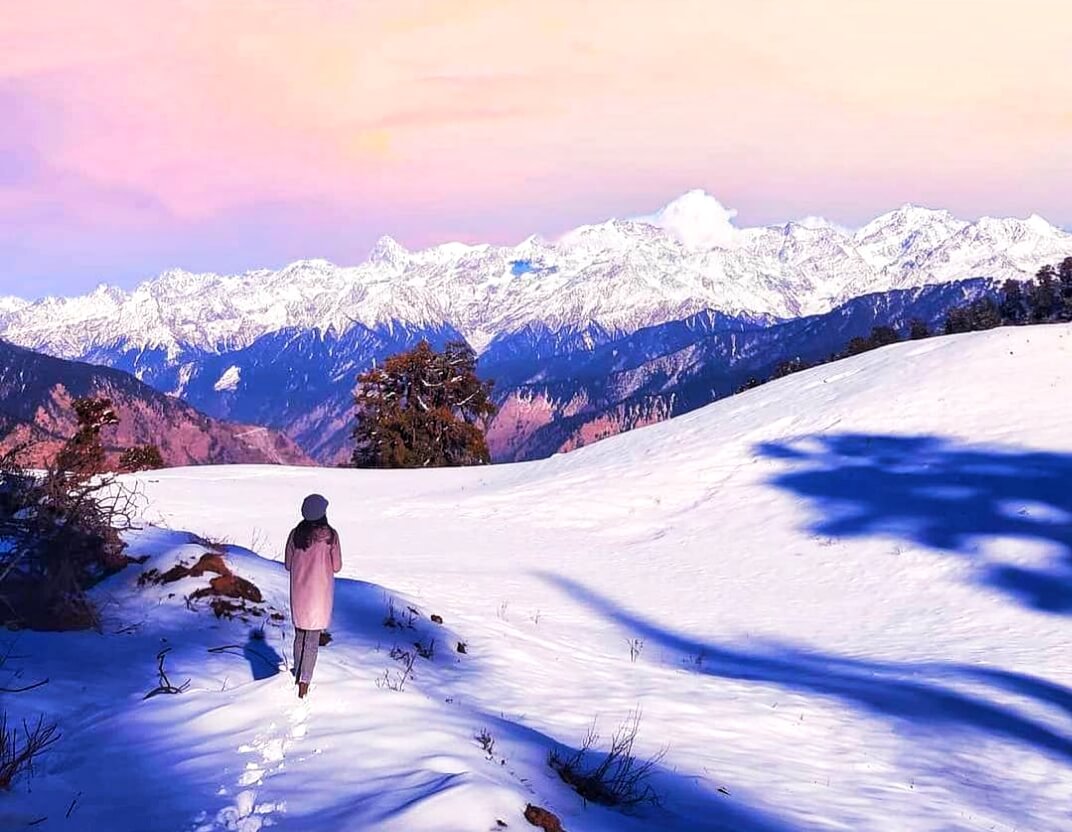
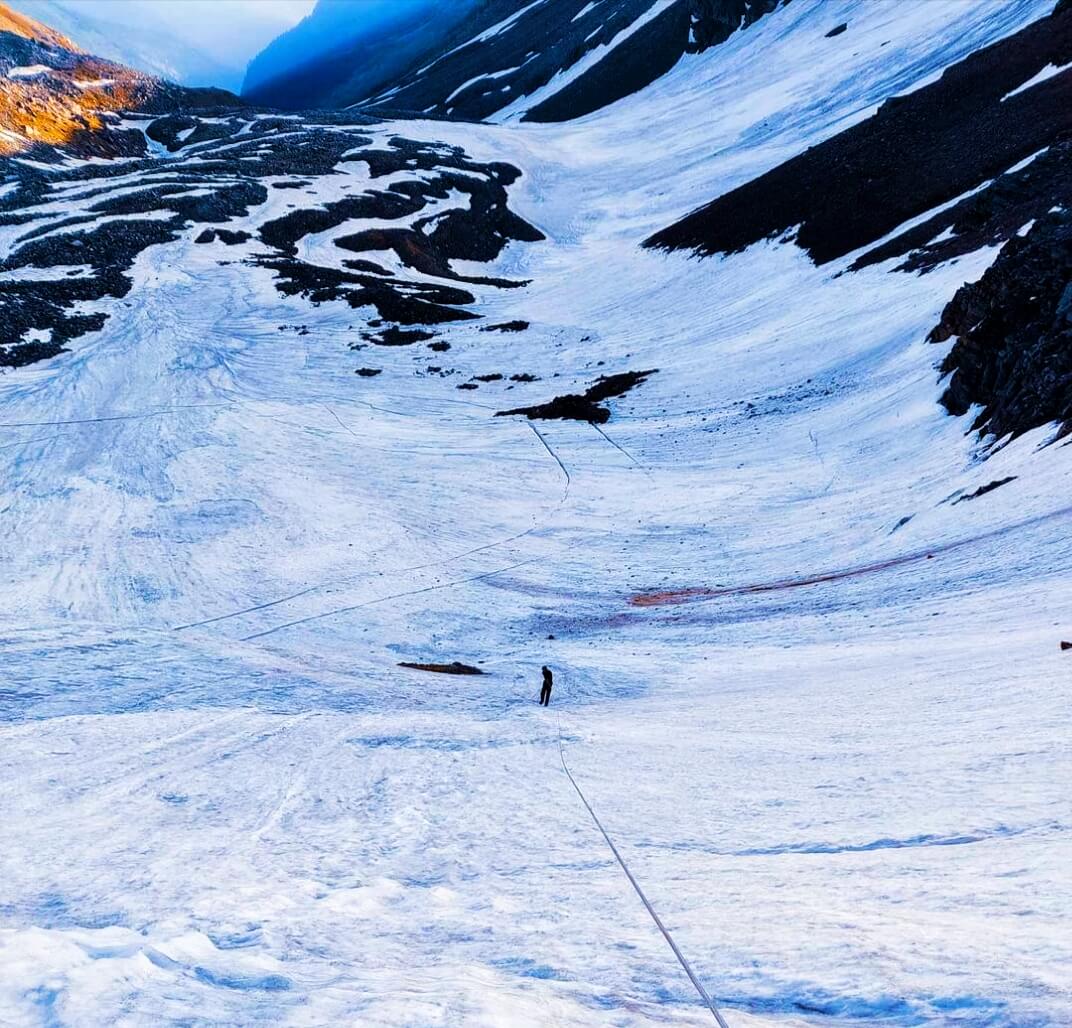
You will be trekking for about 10 hours today, both rising and descending. The Pass is not difficult to time in the absence of snow in the autumn. In the summer, the ascent to the Pass begins shortly after midnight. This is due to the fact that snow softens during the day, making walking harder. A panoramic view of the Kinner-Kailash peaks may be seen from the narrow ledge at the summit of Buran Pass at 15,000 feet. The sight of snow-covered mountains rising from the mist at dawn will be with you for the rest of your life. You'll descend the first 100 metres of an almost vertical snow cliff into the Kinnaur valley via rappelling. Following that, there are 4-5 areas of snow that you may just slide down! The fall from Buran Ghati is fairly swift, taking only 2 hours to lose 3,000 feet of altitude. You'll be met by flowers and plants after you're out of the snow line.
The trek's last day is a complete downhill. You'll wander past dwindling trees that give way to a variety of Himalayan plants. After about an hour and a half, you'll come to a bridge that spans a wide creek. You'll soon see apricot, pear, and peach trees. You'll see apple orchards and civilization an hour later. Through an arch, you would have reached Barua settlement. You'll grin when you see peasants going about their daily routines of farming or caring for animals. Some of them may strike up a conversation with you and ask you to tea. The drop becomes much more fast as you get closer to the village centre. You'll be to the road bridge across Barua Khud in half an hour. Your transportation from Barua to Shimla will be arranged by us. You'll leave at 1 p.m. and arrive in Shimla at 10:30 p.m. If you prefer to go alone, you may rent a car at Karcham Junction, which is 3 kilometres away. You may either go to Rekong Peo or Sangla from this point. Sangla is the largest settlement in the Baspa valley, located 17 kilometres from Karcham. Baspa Valley is also known as Sangla Valley. Nearby attractions include Kamru, Chansu, Basteri, Rakcham, Chitkul hamlet, and the Ranikanda meadows. You may also return to Shimla, India's most popular hill station, with its colonial architecture, rhododendrons, oaks, and fir trees.
For Fixed Departure Booking, please call or watsapp on
+91-7579173771
Inclusion
- Transportation from pickup to drop location.
- Meals while on trek. (Veg + Egg).
- All Necessary entry fees and permits.
- First aid kits and oxygen cylinder and stretcher.
- Poters/Mules to carry central equipments.
- Goalpines staff insurance.
- Mountaineering qualifieds trek leader, guide, cook and staff.
- Accomodation in guest house, home stay, camping during trek.
- Trekking equipments: sleeping bags, mattress, dome alpine shape tents, kitchen Tent, dining tent, toilet tents and micro spikes.
Exclusion
- Any kind of personal expenses.
- During the travel food.
- Insurance
- Any kind of emergency exacuation charges.
- Personal Luggage porterage/Mules charges. INR-300/day.
Things To Carry
- Trekking shoes with good grip.
- Backpack (40-60litres) with rain cover.
- Extra pair of socks.
- Poncho.
- Woolen Cap / Scarf / Bandana.
- Headlamp/ torch.
- Daypack.
- Water bottles.
- Personal medicines.
- Id proof: – (driving license, voters Id etc.)
- Accessories: – sunglasses, suncap, synthetic warm hand gloves.
- Toiletries: – sunscreen, moisturizer, light towel, lip balm, toilet paper, toothbrush, toothpaste, hand sanitizer.
- Clothes: -Warm layers (fleece, woolen and one padded jacket ), two trek pants, three t shirts, one pair thermals uper lower.
FAQ's
A- With 5 years of expertise in the world of adventure, we are here to help. There are numerous trekking companies to select from, and picking the proper one is crucial. Our professional staff has extensive knowledge of mountain terrains, climbing abilities, and real-life experiences as local specialists. We look after our lodging, meals, and equipment after putting safety first. The service quality is never compromised. Himalayan Hikers constantly tries to bring you closer to the nature by delivering sustainable hikes while organising your journey. We assist you in exploring the culture of tiny villages and providing excellent traditional meals from various locations, so go outside of your comfort zone and join our team for once-in-a-lifetime adventures.
A- When visiting a trek, food safety is always a major issue. As a result, we make every effort to select Lodges [tea houses] and restaurants with clean and sanitary kitchens. On our lodge treks, we provide a cook who uses our own cookware to produce safe and appetising meals, as well as sanitary washing facilities. On camping vacations, the food we offer is absolutely safe.
A- It is best to schedule two months in advance to ensure that all of the necessary arrangements are done. If the dates are available, we accept reservations up to one week in advance.
A- Fill out the reservation form on our website (link) or particular trek’s page or send us an email at info@goalpine.in. You may also reach out to us via the phone numbers listed on the website.
A- Yes, we rent out trekking equipment. Trekking necessitates a significant financial commitment, and many people like this incredibly costly hobby, therefore we have some exciting news to share that will be a huge comfort to your wallet. All you have to do now is make a specific rental request when booking your trip to acquire your Trek Gear on Rent. That's it! For your convenience, we've kept things simple.
A- Carry your backpack, and if you are unable to do so for whatever reason, porters will accompany you. Offloading is subject to additional fees.
A- On treks, lodging options include hotels, homestays, lodges, guesthouses, and tents. We attempt to provide lodging in homestays and hotels in local locations to help locals earn a living. It also allows you to experience mountain life and learn about the local folks.
A- The weather is unpredictable and can change at any time, however nights are normally chilly and days are mild. However, it is entirely dependent on the season and weather conditions. Keep enough warm clothing on hand to defend oneself from the cold.